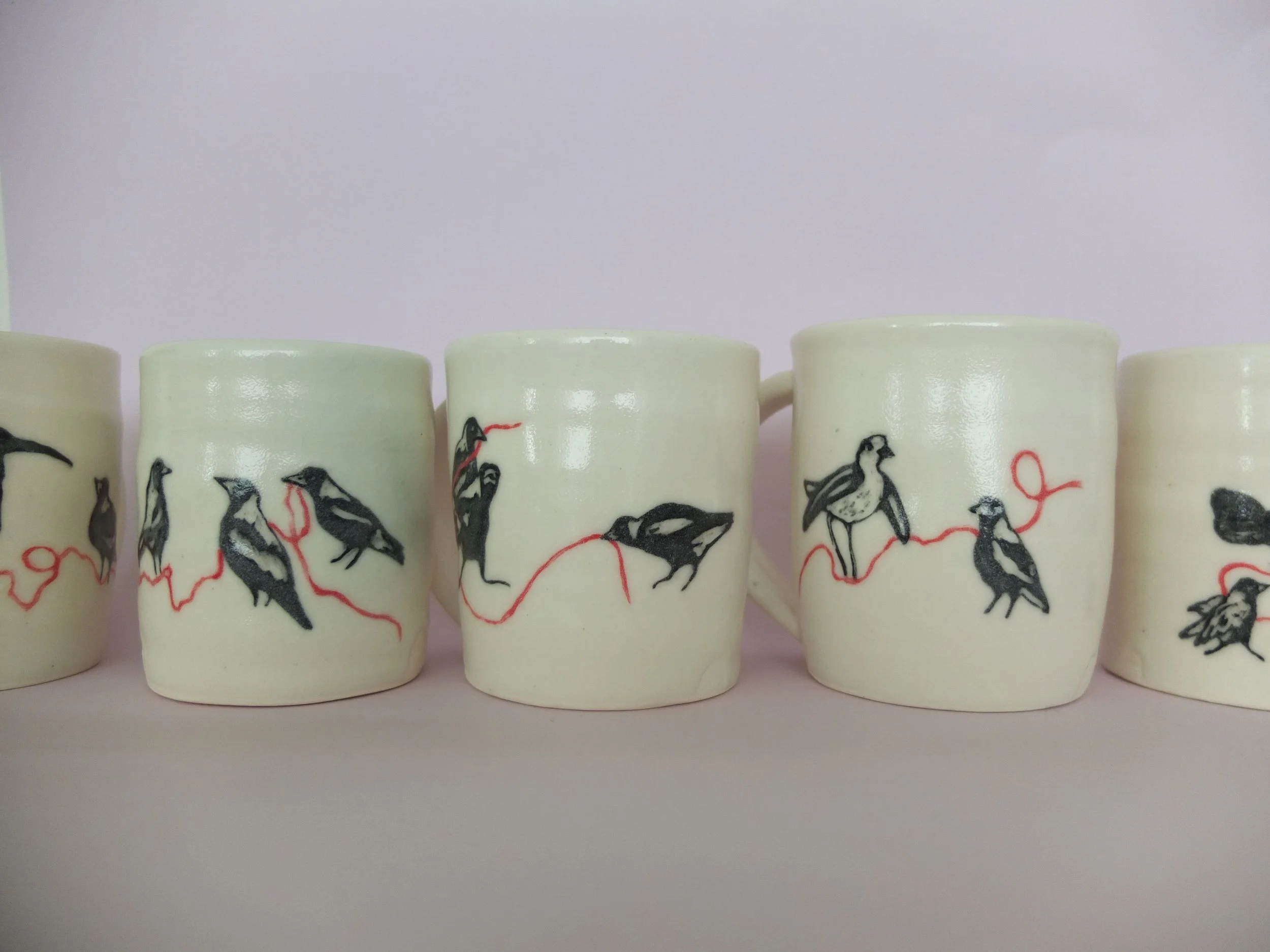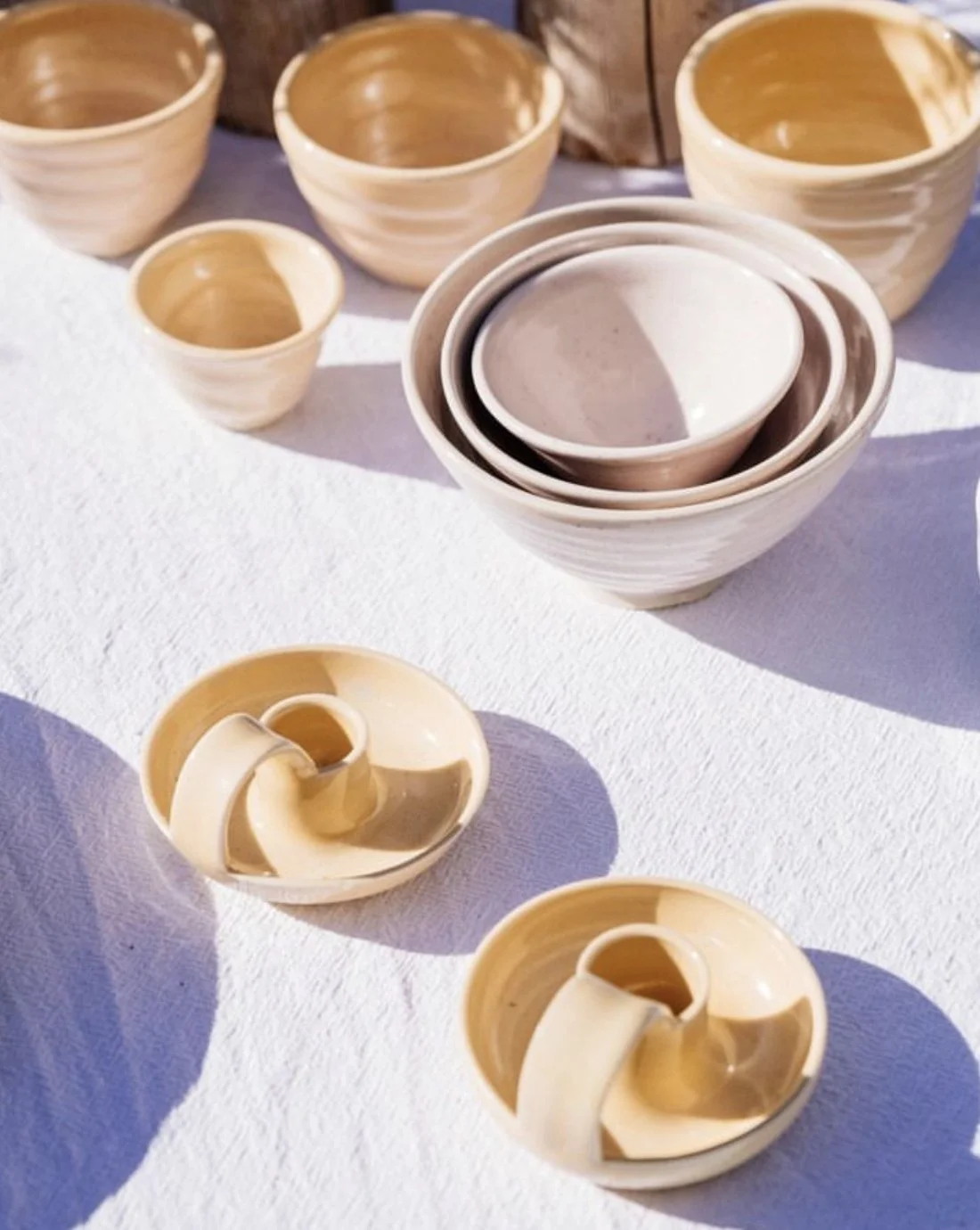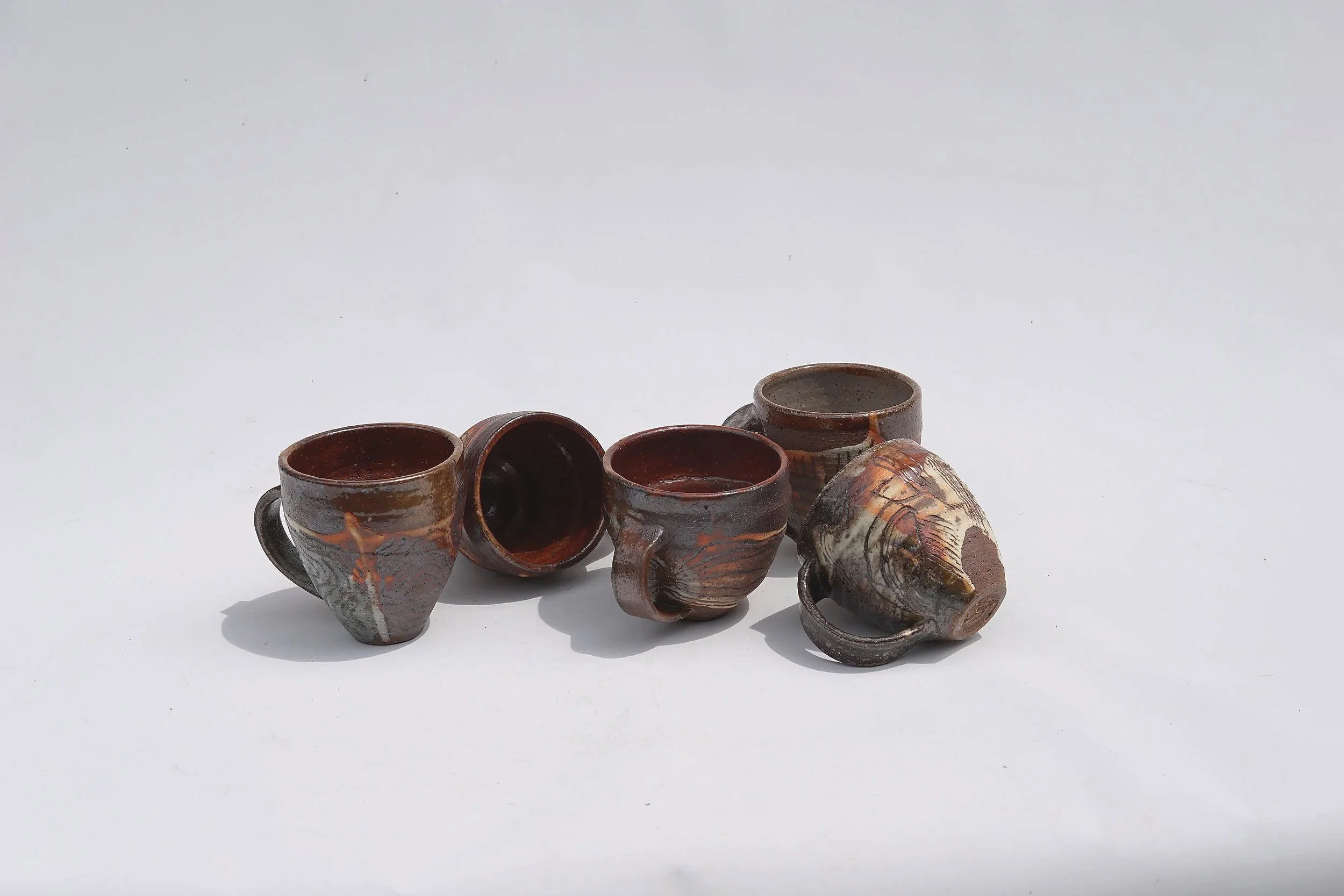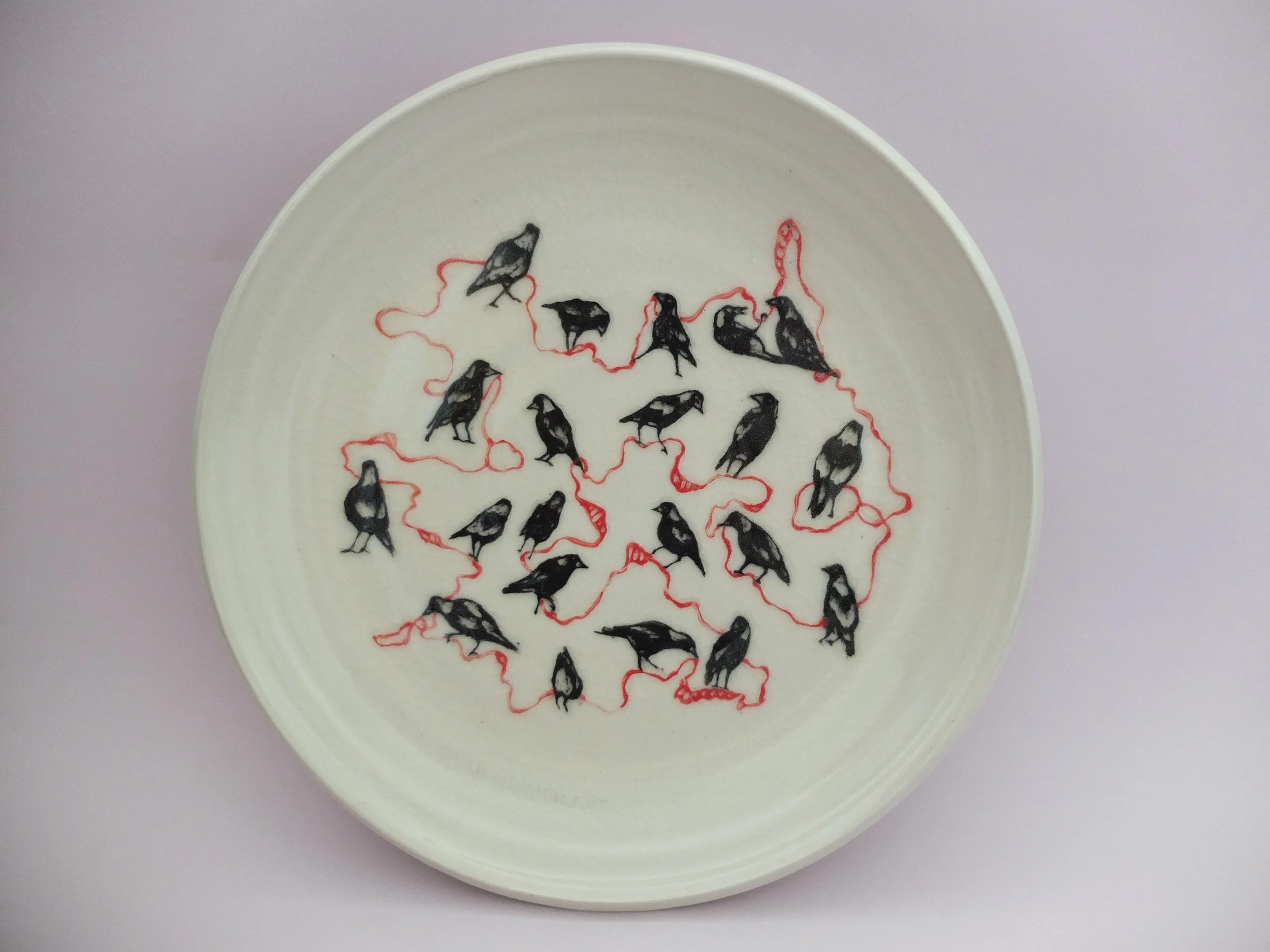
Painted by hand; each story as unique as the hand that will hold them.
Welcome to ‘the warbly mugpie’ collection.
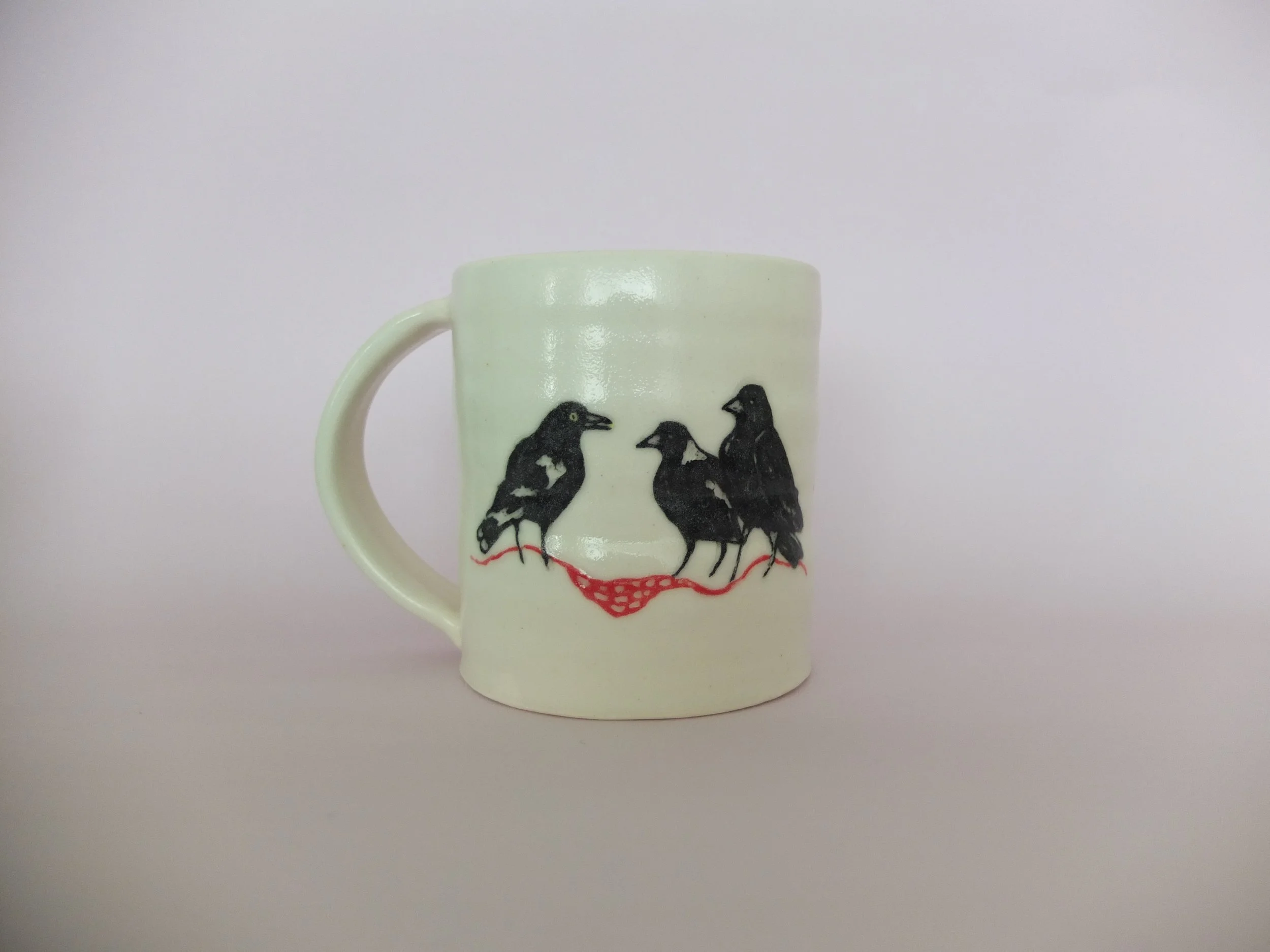
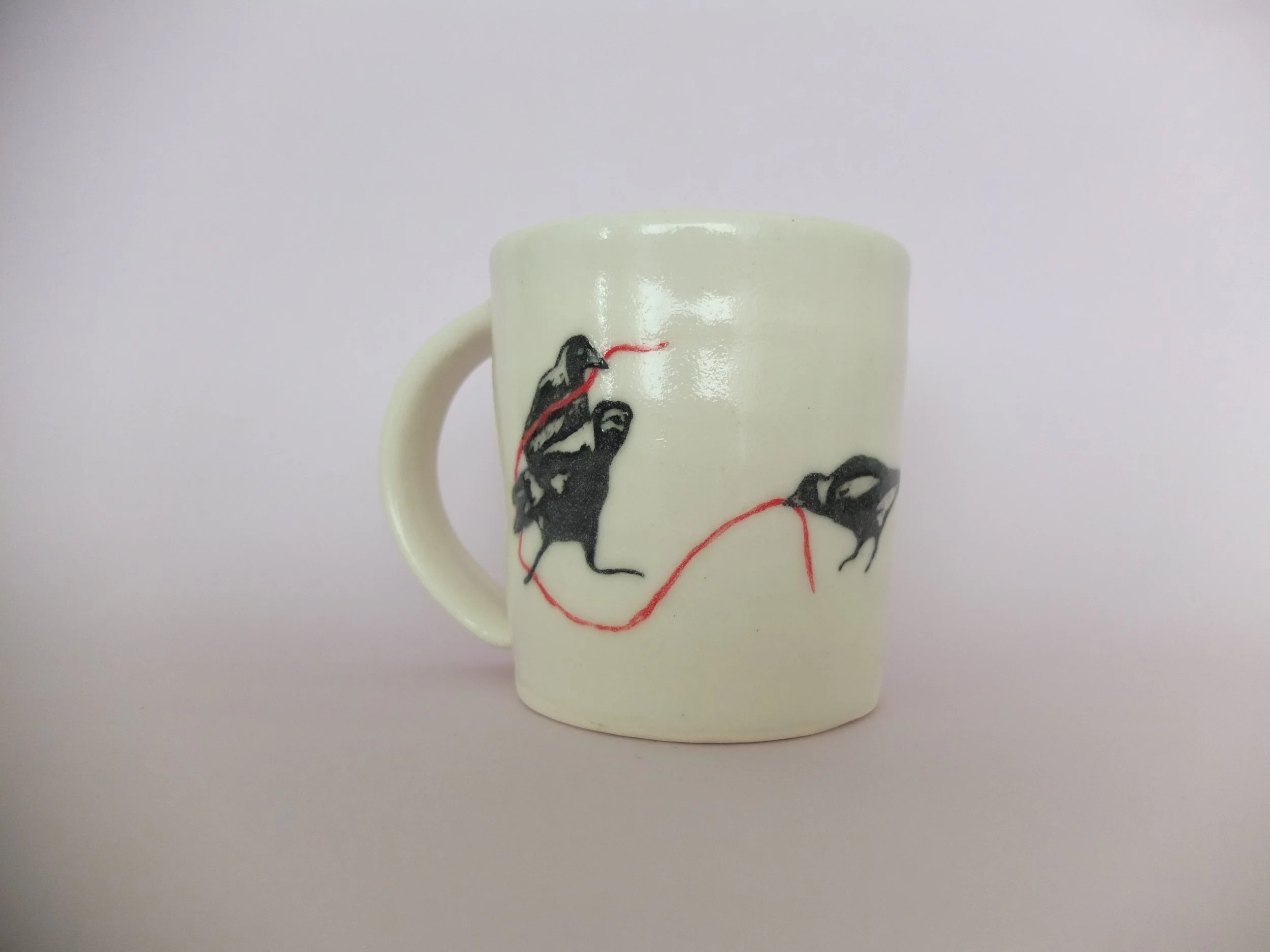
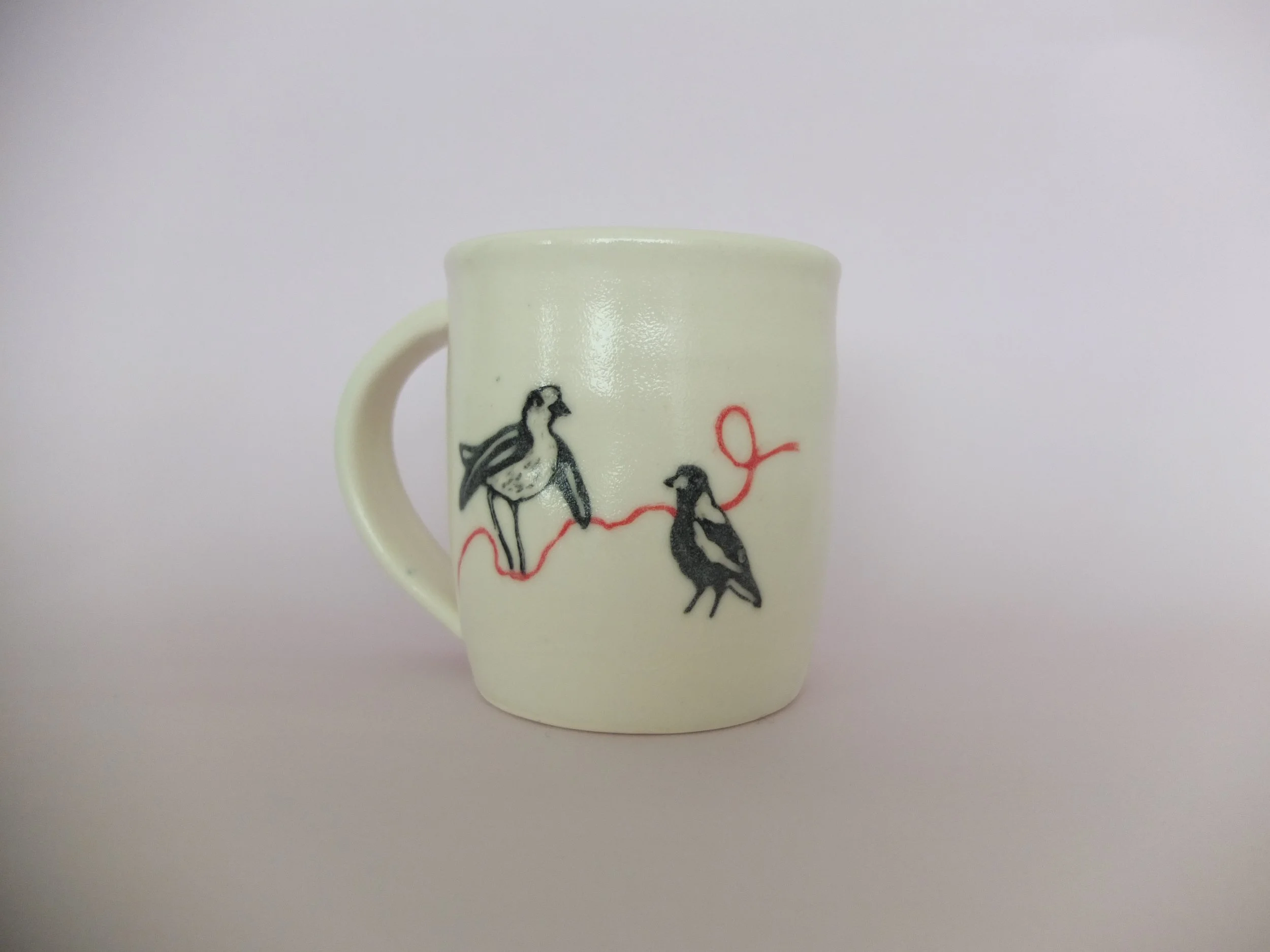
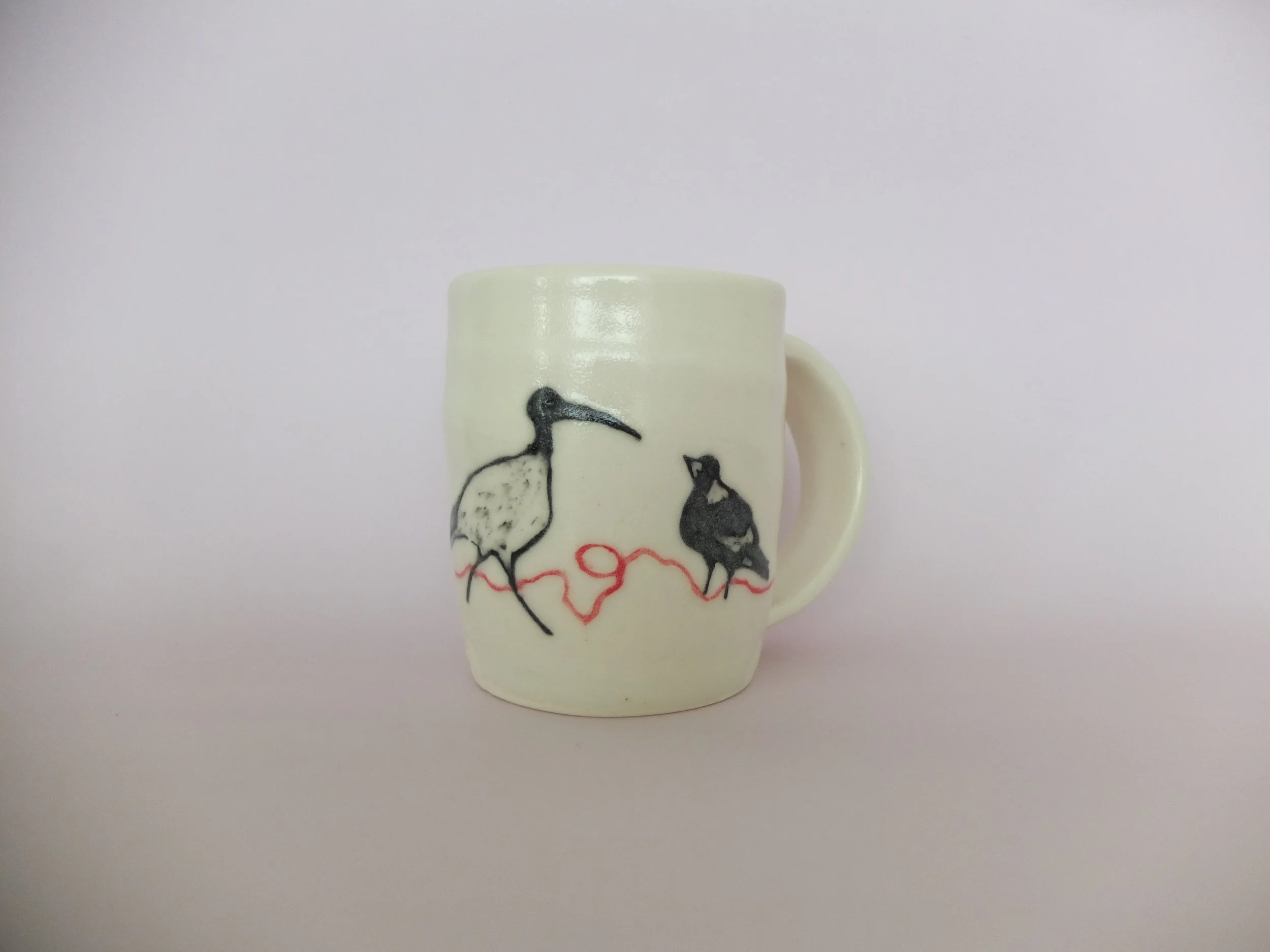
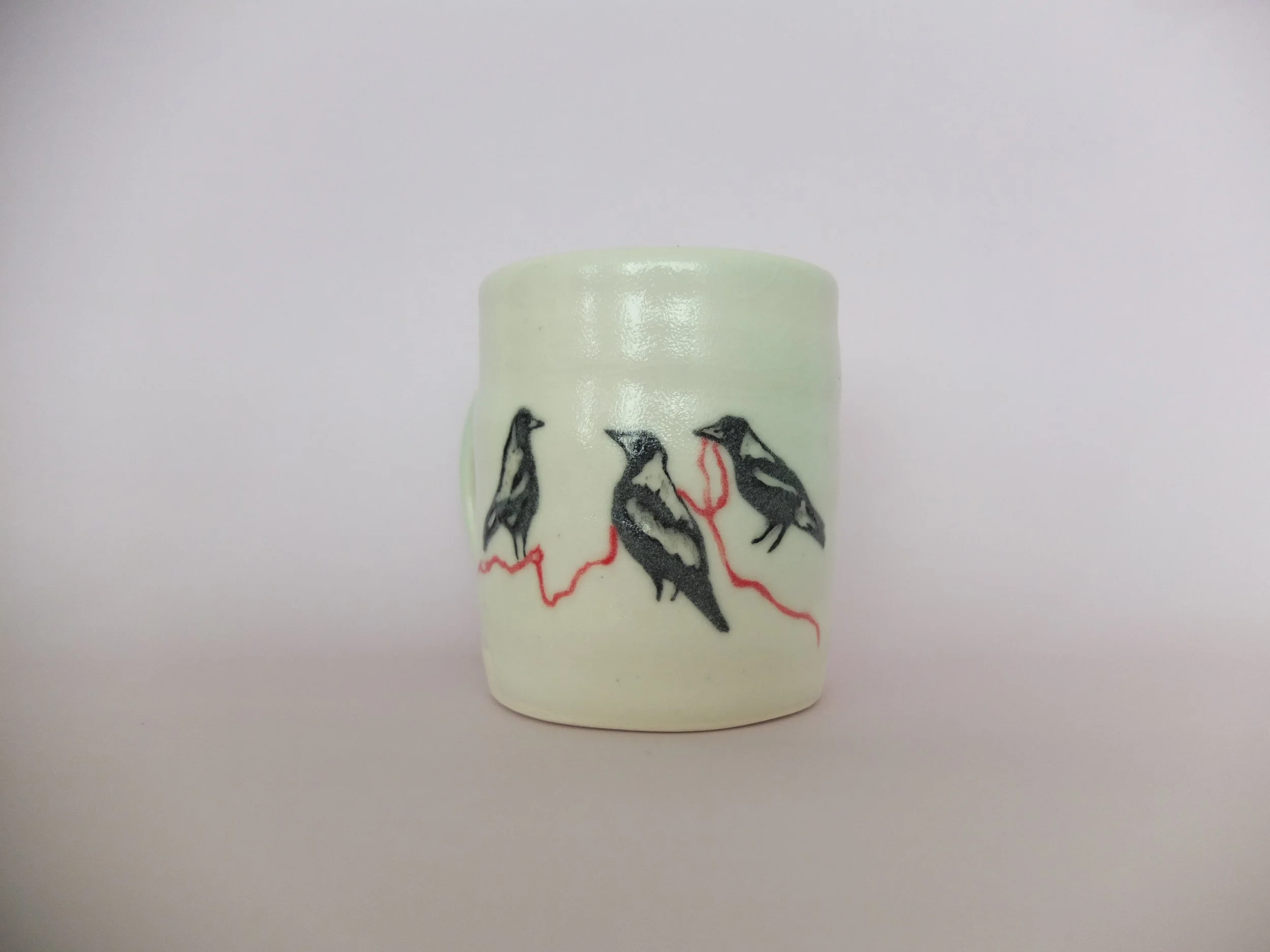
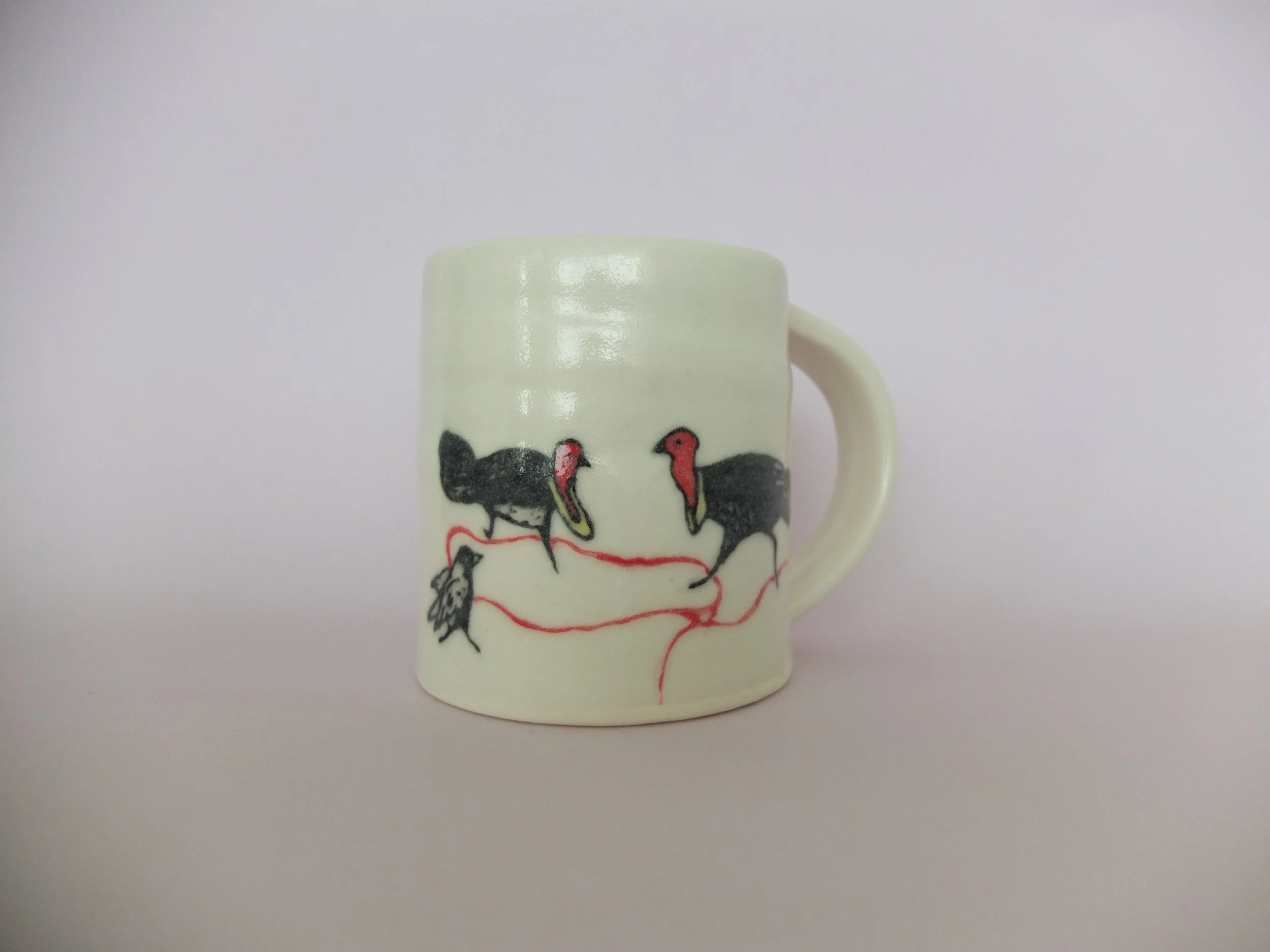
When I think of magpies, I think of how they
-
People who cross paths with magpies either love them or hate them, and there rarely seems to be a response that sits in-between.
The people that love them focus on the beauty that they bring to our daily lives - through their unique warbles, playful company, and lifelong friendships.
The people that hate them focus on the fear they feel instead; a fear they have learned from stories or a fear they have learned from experience. Those people will likely go to lengths to avoid crossing such paths - from changing their daily routes, avoiding picnics in Spring, and regularly raising their cortisol levels as their measures of self-protective clothing fail to deter the swoop of a scared magpie. Though these examples seem small, they point to a broader pattern of how our lives are so easily shaped by any undercurrents of fear.
Fear is a powerful emotion that shapes how we think and therefore how we behave. It is a necessary feature for survival - a feature that we share with magpies. But when we don’t pause to reflect on our relationship with fear and how it shapes the way we think, act, and interact, we risk losing connection to each other. The health of our communities depends on connection and common ground. When you pause to pay attention to magpies, you can begin to see what we have in common.
-
You can see how the youths learn through bold curiosity, practicing their language, playing to connect, causing chaos when unsupervised, and growing when boundaries are taught. You can see how the adults actively provide for and protect their community and how the elders lead with knowledge toward safety, sharing history through song.
You can see how different magpies have different relationships with power, different ideas about how to use their power and what they will do to keep it. You can see that they have daily routines that can change with the weather; times to gather in groups and times to explore by themselves.
You can see the strengths in their health when they are included in the community, and how that changes when they have been excluded from the community. You can see what they are willing to do to protect those that they love, and what they may do out of fear of being hurt. You can see that they value relationships with those who care to have one; and will look to find ways to show you they care by sharing their time, their song, and their treasured objects.
-
And if you pause to notice these commonalities - and approach your local magpie with a warm hello and a gentle acknowledgement - you might be surprised to find that you no longer need to walk the longer path, remain indoors for Spring, or wear clothes that can’t protect you more than your compassion can. And in this way, magpies teach us about community. They show us the exact point that exists between fear and love, and the moment that we can move beyond fear and choose curiosity for connection.
If you can get to a place where you can recognise what you have in common with a bird like a magpie, then imagine what is possible when you become curious about people who are different to you - in ages, races, sexualities, gender expressions, abilities, and religions - right here in our local community, all the way out to our global one.
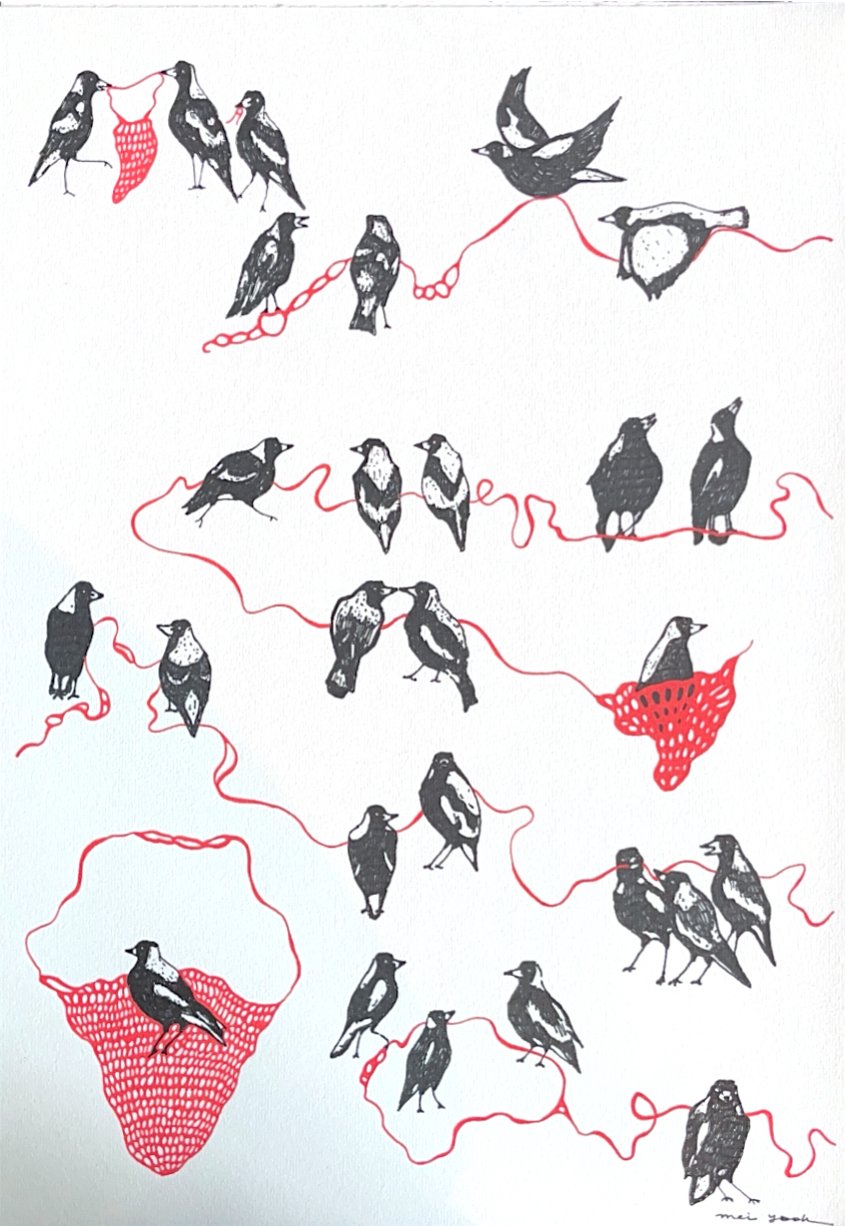
Each magpie I paint - whether in conversation alone, with other magpies, or with other friends - is an invitation to see ourselves and each other. When you pause with a cuppa to look to the day to come, the day that is, or the day that has gone, may these magpies remind you of these relationships too.
If you’re interested, connect.
The magpies can feature on any form or shape, fit for purpose.